How to Find a High-Quality Meme Coin Entry in 2026 Without Chasing the Pump
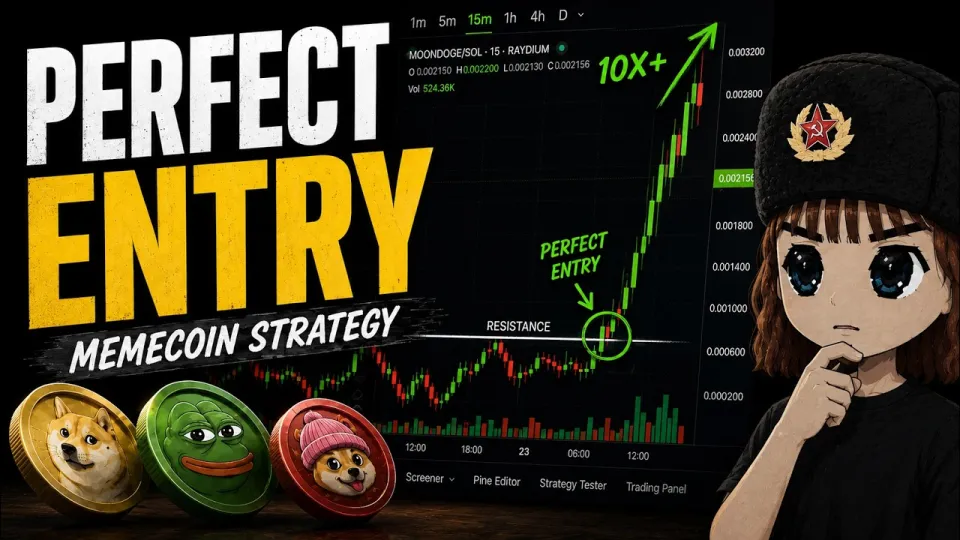
Video: How I Find the PERFECT Entry on Memecoins 📈 (Full Strategy)
Need articles like this for your video? They help promote it on YouTube and Google — order them in the Telegram bot @sat_sit_bot. It writes articles around your video, embeds the video and publishes them on popular niche websites (no ads). Free trial — 50 articles.
Most meme coin traders lose money because they buy the wrong moment, not the wrong token. A high-quality meme coin entry means waiting for chart structure, confirmed momentum and a defined invalidation level before you size a position, so the risk-to-reward is decided in advance rather than improvised during a green candle. That is the core of the entry framework broken down by the starwifpump channel, and you can follow the tooling updates behind it in the Plasma Telegram early-access channel.
Why the meme coin entry matters more than the pick
A meme coin is a low-float, high-volatility asset where the narrative can be right and the trade can still lose. Two traders buying the same token five minutes apart can end up with completely different outcomes: one enters on a base with a tight stop, the other buys the third vertical candle and holds a position with no logical exit. The difference is not conviction, it is location on the chart.
This is why the entry is the actual edge in memecoin trading. The token itself is a lottery ticket with a story attached; the entry is the only variable you control. Before any chart work, decide three numbers: the price where your thesis is wrong, the price where you take partial profit, and the maximum percentage of your portfolio this single trade can consume.
The four conditions of a valid entry setup
A tradeable setup is a combination of structure, momentum, location and liquidity, and all four should be present before you click buy. If one is missing, the setup is a guess.
- Structure. The chart should show a series of higher lows, a reclaimed previous resistance, or a tight consolidation base after an initial move. A token making lower highs into a falling chart is not a setup, it is a falling knife.
- Momentum with follow-through. Volume should expand on the move up and contract on the pullback. One green candle with no continuation is noise; a candle that closes near its high and holds the level is information.
- Location. Entering near support, a breakout retest or the upper edge of a base gives a defined stop. Entering mid-candle after a 200% run gives you nothing but hope.
- Liquidity. Check the pool depth and holder distribution before entry. A chart that looks perfect but has thin liquidity will gap straight through your stop when a large holder sells.
How to read momentum without chasing the pump
Momentum is not the same as a big green candle; it is the persistence of buying pressure across several candles. The practical test is simple: after a strong move, does the price hold its gains, or does it immediately give them back? A token that consolidates sideways at the highs is showing strength. A token that dumps 40% on the first red candle was never strong, it was thin.
Watch for volume behaviour rather than candle colour. Healthy momentum shows rising volume into new highs and declining volume during pullbacks. If volume spikes on a red candle and the price loses the level that started the move, the momentum has flipped and the setup is dead. On Solana memecoins, where a single wallet can move the chart, this distinction between real demand and a coordinated pump is the difference between a trade and a donation.
Using pullbacks and support to improve risk-to-reward
Pullbacks are where meme coin entries become asymmetric, because they let you buy the same thesis at a better price with a tighter stop. The pattern to look for is a strong impulse move, a retracement into a prior breakout level or the moving average that guided the trend, and a stabilisation candle with declining volume. That is your zone, not the top of the impulse.
Set the stop just below the support that defines the setup, not at a round percentage. If the stop distance is too wide relative to the target, the trade is not worth taking regardless of how good the narrative sounds. Taking partial profit into strength, for example selling a third of the position into the first extension, converts a volatile meme trade into a managed one and removes the temptation to round-trip a winner.
Red flags that mean you should not enter
Knowing when to skip a trade is the skill most beginners never develop, and it protects capital more reliably than any indicator. Refuse the entry when the chart is vertical with no base, when volume is fading into new highs, when a single wallet holds a large share of supply, or when the only reason to buy is that the token is trending on social media. Those are FOMO conditions, not setups.
A useful rule: if you cannot state in one sentence where you are wrong, you do not have a trade. Also beware of the late entry after a long green sequence, where the stop has to sit so far away that a normal pullback wipes the position. Patience is not passive here, it is the filter that keeps you out of the worst risk-to-reward situations.
Common questions from newer meme coin traders
Beginners tend to ask the same things, and the answers are practical rather than philosophical. The first is about tools: trackers and terminals are useful for filtering by liquidity, age and holder count, but no filter replaces reading the chart itself. The second is about narrative timing, meaning how to catch a token before a social catalyst; the honest answer is that chasing announcements usually means buying someone else's exit, while trading the reaction after the news is confirmed is a repeatable process.
The third recurring question is about chains. The entry logic, structure and invalidation rules are the same whether the token lives on Solana, Base or another ecosystem, but liquidity depth and the quality of the trading terminal differ, and those change how much slippage you accept. The fourth is about bankroll: traders who lost money on memecoins usually entered with money they could not afford to lose and sized every trade as if it were the last one. Fixed position sizing and a written plan matter more than any single pick.
Useful links
- Plasma Telegram early access — paper trading, sniping, copy trading and position tracking in one place
- starwifpump Discord — community and live trade discussion
- Padre terminal VIP access
- Solpump
- starwifpump on X
- Axiom trading terminal
- GMGN VIP access
Final thoughts on building a repeatable meme coin process
The goal is not to predict every move but to build a process you can repeat: structure first, momentum confirmed by volume, entry at support with a defined stop, partial profits into strength. Most meme coin losses come from entering late and sizing too large, and both are fixable with rules written before the trade rather than emotions felt during it. The starwifpump channel breaks this framework down on real charts and is a solid starting point for traders who want to stop chasing candles. If you want the tooling that supports this workflow, join the Plasma Telegram early-access channel and start with paper trading before risking real capital.
Key takeaways
- Most meme coin losses come from timing the entry, not from picking the wrong ticker.
- A valid setup needs structure first: higher lows, a reclaimed level or a clean consolidation base.
- Momentum is confirmed by volume expansion and follow-through, not by a single green candle.
- Pullbacks into support give better risk-to-reward than buying vertical candles.
- Pre-defined invalidation and profit-taking levels are set before the trade, not after.
Source: How I Find the PERFECT Entry on Memecoins 📈 (Full Strategy) · Markdown version
Questions & answers
What is the best time to enter a meme coin?
The best entry is usually on a pullback into a defined support level after an impulse move, or on a confirmed breakout retest, not during a vertical green candle. The setup should give you a clear invalidation level close enough that the risk-to-reward makes sense. If the stop has to sit far away, the entry is late.
How do I avoid FOMO when a meme coin is pumping?
Write your entry conditions down before you look at the chart and refuse any trade that does not match them. A token that is already up several hundred percent with no base offers no logical stop, so the correct action is to wait for a pullback or skip it entirely. Missing a trade costs nothing; entering without a plan costs capital.
Does the same entry strategy work on every chain?
The chart logic of structure, momentum and invalidation is the same across Solana, Base and other ecosystems. What changes is liquidity depth, holder concentration and terminal speed, which affect slippage and how tight your stop can realistically be. Always check pool depth before applying the same position size.
How much should I risk on a single meme coin trade?
Most experienced traders keep risk per trade small, often a low single-digit percentage of the portfolio, because meme coins can gap through stop levels. Size the position from the stop distance rather than picking a dollar amount first. Never use money you cannot afford to lose entirely.